
Why an Honest AC Quote Needs Eyes on the System
A price given over the phone, before anyone has looked at the system, is not a quote. It is an estimate of a problem nobody has identified yet, and a guess that turns out wrong becomes a surprise on the invoice. An honest number has to come from someone standing at the equipment, testing it, and naming the actual failure. That is why a call for AC repair here starts with a flat-fee diagnostic visit and ends with a written quote before any repair work begins, not the other way around.
A Number Said Over the Phone Isn't a Quote
Picture the call: a symptom gets described, the air isn't cold, there's a smell, the outdoor unit isn't running, and someone on the other end offers a dollar figure before a technician has driven anywhere or opened a single panel. That figure has to come from somewhere, and the only place it can honestly come from is a guess dressed up to sound like an answer. Nobody can see a compressor's condition or a coil's temperature split through a phone line.
That does not make the person offering the number dishonest on purpose. It usually just means the number is doing a job it was never built to do: standing in for a diagnosis that has not happened yet, for a system that specific person has never stood in front of.
The same symptom can mean several different things depending on the system behind it. A thermostat that isn't cooling could point to a refrigerant issue, a failing capacitor, a stuck contactor, or something further downstream, and each of those is a different repair with a different scope. Naming a price before knowing which one it is means picking a number and hoping it lands close, which is a different activity than pricing a repair.
Guesses Turn Into Surprises One of Two Ways
A phone-quoted price tends to break in one of two directions once a technician actually arrives. Quoted low, it wins the call and then grows once the real cause turns out bigger than the symptom suggested, and now the homeowner is negotiating a new number mid-repair instead of deciding upfront whether to move forward. Quoted high, it was padded from the start to cover whatever might be wrong, which means anyone whose actual problem was small just overpaid for a number that was never really about their system in the first place.
Either way, the person left holding the gap is the homeowner, not the company that offered the guess. A number that only becomes accurate after someone has looked was never really a quote to begin with, it was a placeholder.
What Actually Changes Once Someone Looks
The variables that separate a five-minute fix from a longer repair, which part failed, how hard it is to reach, whether the diagnosis is simple or turns out layered, are real, and they are exactly why a number can't exist before a technician has traced the actual cause. That ground gets covered in full on its own page. What matters here is simpler: those variables are unknowable from a description, and any number offered before they're known is an average, not an answer about a system nobody has actually tested.
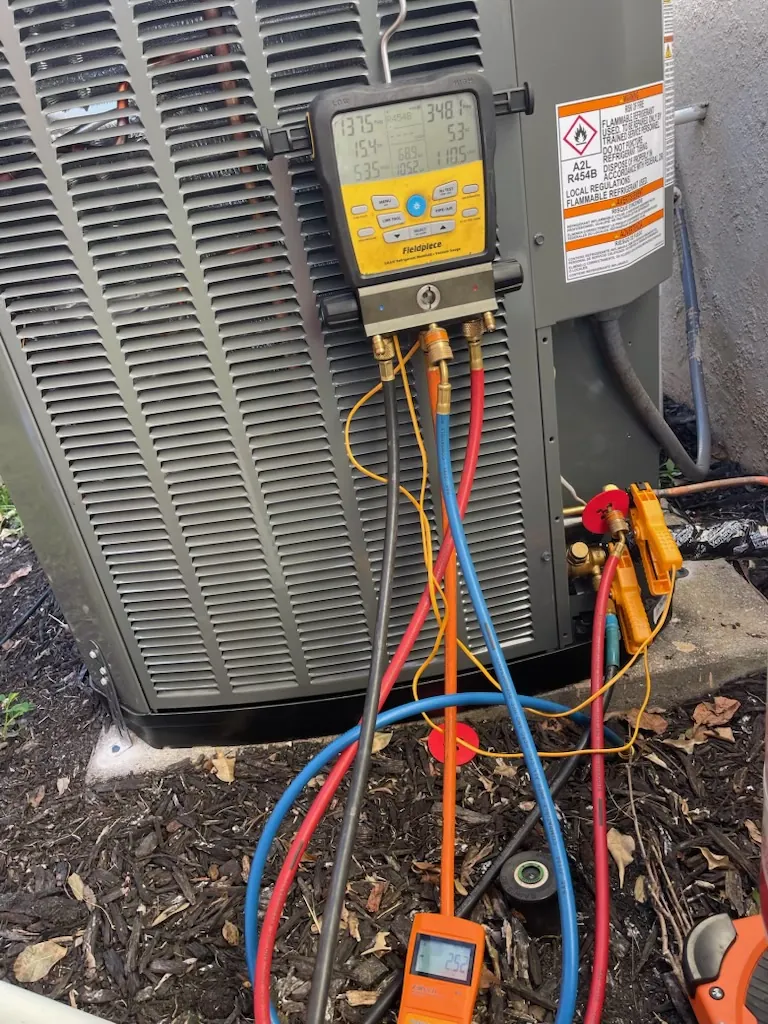
A diagnostic visit is where a guess turns into an actual finding, gauges connected, readings taken, the failed component identified and shown, not assumed.
Why 'Get Three Quotes' Doesn't Work Over the Phone
Shopping around usually means calling a few companies and comparing what each one says. That works when everyone is pricing the same known job. It falls apart when the job itself is still unknown, because three phone numbers based on the same vague symptom aren't three prices for the same repair, they're three separate guesses built on three separate assumptions about what's actually wrong, made by three people who have not looked at the system either.
A lower number in that stack doesn't mean a better deal. It might mean a smaller padding cushion, a different assumption about which part failed, or a plan to revisit the price once someone actually arrives. There's no way to tell which from a phone call alone, which is exactly the problem. Comparing quotes only means something once each one reflects an actual look at the same system.
The Honest Version: Diagnose First, Quote in Writing, Then Ask
Exclusive Cooling Solutions runs the order the other way. A repair visit is a flat $150 service call, the same number whether the fix turns out simple or involved, and that visit is what pays for a technician actually testing the system and naming the real problem. From there, the price for the actual repair gets written down and handed over before any repair work starts, not estimated verbally and adjusted later.
That sequence means the number a homeowner sees is tied to their specific system, not a category their symptom happened to fall into. It also means nothing gets fixed, and nothing gets billed for fixing, until that written number has been seen and agreed to.
What This Protects You From
The upfront-quote order protects against both failure modes above at once. There's no low number to grow once the truck is in the driveway, because no number was offered before the truck arrived. And there's no padded-high number either, because the price is built from what was actually found, not from covering every possibility a phone description could have meant.
It also means a homeowner never has to decide whether to trust a stranger's number sight unseen. The decision comes after the diagnosis, with a real figure in hand and a technician standing there able to explain exactly what it covers and why, component by component if needed, rather than a total with nothing underneath it.
That written quote also becomes something to actually hold onto, a record of what was agreed to before work started, not a verbal figure that's hard to point back to later if the final bill doesn't match what was said on the phone.
What the Call Will and Won't Give You
Calling in with a symptom will get a straight conversation about what that symptom usually points toward, roughly what kind of visit it calls for, and when someone can be there, Tyler, Guiseppi, or someone from their team, with response during business hours averaging under three hours. What it will not get is a dollar figure attached to a repair nobody has seen yet, because that number would not mean anything.
An AC repair visit starts with the flat $150 diagnostic and ends with a written quote you get to say yes or no to, in that order, every time.
Get a Real Diagnosis Instead of a Guess
Call or text (239) 350-5234. A flat $150 service call gets a technician looking at your system and a written quote in hand before any repair work begins.