
What is an air handler, and where does it live in a Florida home?
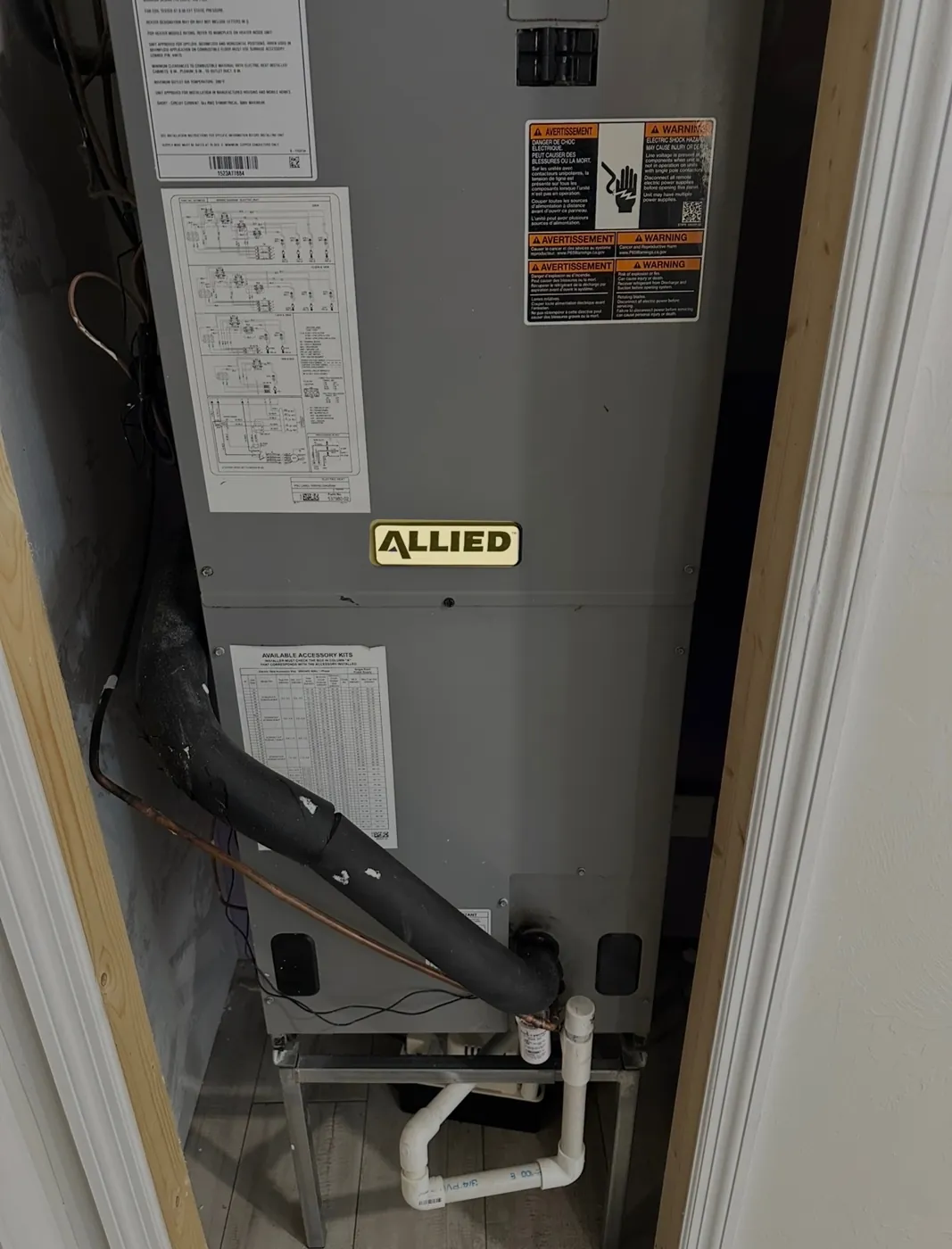
An air handler is the indoor half of a central air conditioning system, the metal cabinet that houses the blower fan and the evaporator coil where heat and humidity actually leave the air passing through it. In a Florida home it typically lives in one of three spots: an interior closet, the garage, or the attic. Each location changes how hard the equipment works, how easily anyone can reach it, and how humidity around the cabinet itself behaves.
What the Air Handler Is Actually Doing
Split-system air conditioning works in two halves. The outdoor unit holds the compressor and condenser coil, the part that does the heavy lifting of moving heat out of the refrigerant. The air handler is the other half, sitting inside the house, and it's where the actual cooling of your air happens. Warm, humid house air gets pulled in by the blower, pushed across the cold evaporator coil, and sent back out through the ductwork noticeably cooler and drier than it went in.
The moisture that condenses off that coil drips into a shallow pan and leaves through the condensate drain line, so the air handler is also where your system's water-handling starts. Anything mounted in that cabinet, the blower motor, the coil, sometimes an auxiliary heat strip, has to deal with whatever humidity and temperature exist right around it, which is exactly why where the cabinet sits in the house matters as much as what's inside it.
A Closet Keeps It Close, But It Still Needs to Breathe
An interior closet is the most straightforward placement: short duct runs, easy access for anyone who needs to change a filter, and equipment that stays inside conditioned space instead of fighting outdoor heat before it even starts cooling. That last point matters more than it sounds, since a cabinet sitting in air already close to room temperature has less work to do than one starting from a hotter baseline.
The tradeoff is that a closet needs its own path for air. A louvered door, or a dedicated return grille, keeps the space around the air handler from turning into its own small, stuffy pocket of humid air. A closet sealed up tight with no air movement holds onto moisture longer than the rest of the house does, and that dampness sits right where the electrical connections and ductwork joints live.
A Garage Air Handler Deals With Air the Rest of the House Never Sees
Plenty of Cape Coral homes put the air handler in the garage instead, especially on slab homes without easy attic access. It clears up interior closet space, and it can keep duct runs short if the garage sits centrally to the rest of the floor plan.
The catch is that a garage isn't conditioned space. It runs hotter and more humid than the rest of the house most of the year, which means the cabinet, the duct boots, and any exposed refrigerant line running through it sit in tougher ambient conditions than a unit tucked into an interior closet. A well-sealed cabinet and properly insulated ductwork matter more here than they would in a closet, simply because the surrounding air is already working against them.
An Attic Placement Trades Easy Access for Extra Heat
Attics are the least convenient spot for anyone who has to reach the equipment, usually meaning a pull-down ladder and a hot crawl every time a filter needs changing. They're also, by a wide margin, the hottest part of the house for most of the day, since heat collects under the roof deck long after the sun goes down.
That heat has a real effect on the air handler itself. Algae and biofilm build up on any coil and drain line in this climate, and a hot attic gives that growth a warmer place to do it. It's one more reason an attic unit benefits from not being forgotten between service visits.
Placement Becomes a Real Decision During a New Install
Each of these three spots can be the right call for a given house, since most existing homes already have ductwork and structural realities that decide the location long before anyone gets to pick a favorite. Where it actually becomes a decision worth weighing on purpose is during a new install, when duct routing, humidity exposure, and future access for filters and service are all still on the table.
A new AC installation is the moment to think through those tradeoffs instead of defaulting to whatever the last contractor happened to choose. A free written estimate covers that conversation along with the equipment itself, so the placement gets chosen for your home, not inherited from someone else's.
Planning a New System and Weighing Where It Should Go?
Call or text (239) 350-5234 for a free written estimate. Tyler, Guiseppi, or someone from their team will walk the space with you before recommending a spot.