
Why is the insulation on my AC line falling apart, and does it matter?
Yes, it matters. That black foam sleeve wrapped around the larger copper line running to your outdoor unit keeps cold refrigerant from warming up before it reaches the compressor, and keeps that cold line from sweating onto everything around it. Florida sun breaks that foam down over years, cracking it, drying it out, and eventually exposing bare copper. Once it fails, the system loses a little efficiency and the exposed line can drip condensation right where you don't want it.
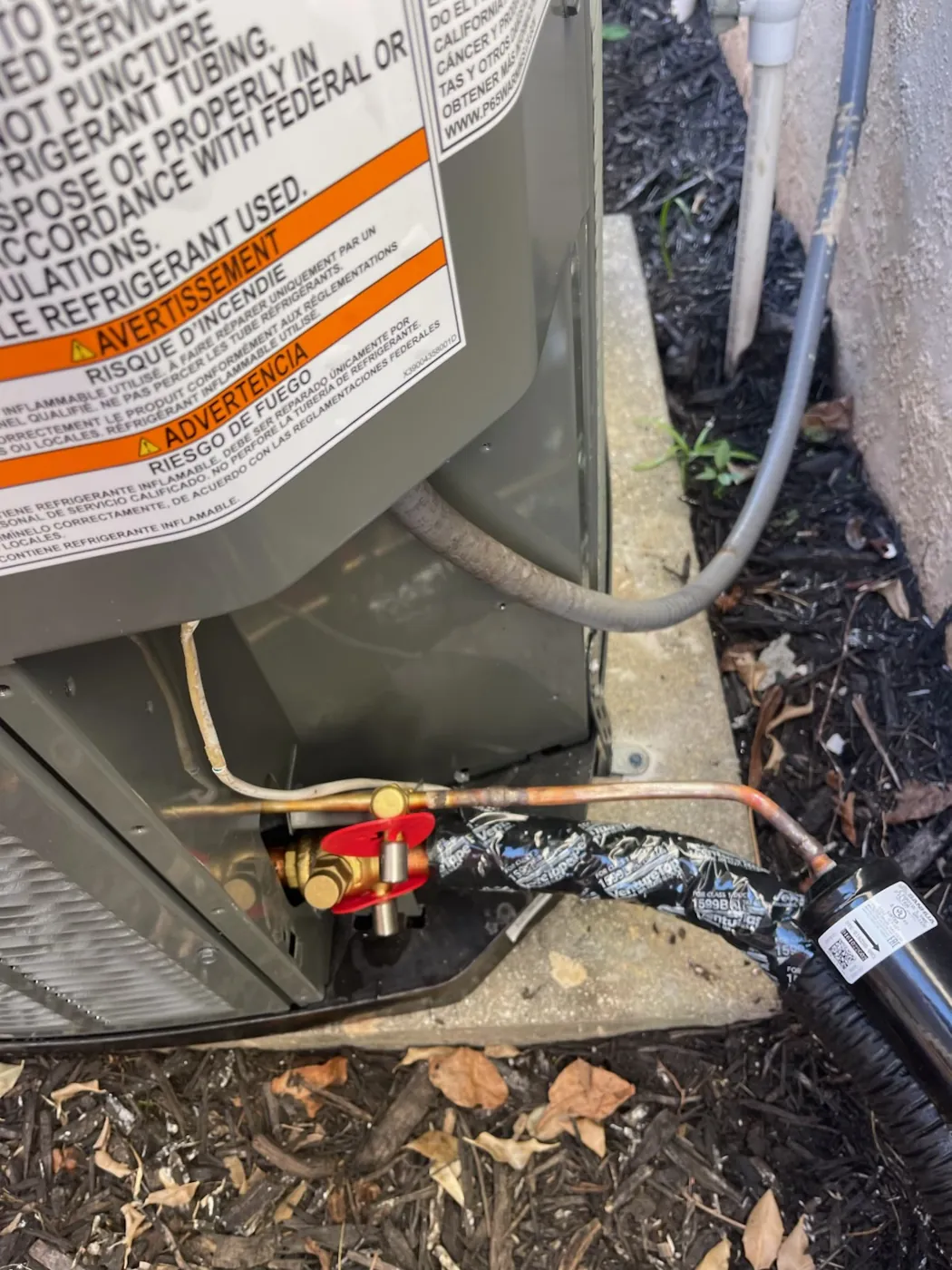
What That Black Foam Sleeve Is Actually Doing
Two copper lines run between your outdoor unit and the indoor coil. The larger one carries cold refrigerant gas back toward the compressor, and it's the one wrapped in thick black foam insulation for its entire visible run. That foam has two jobs, not one. It keeps the refrigerant inside cold instead of letting it absorb heat from the outside air on its way back, and it keeps the line's own cold surface from sweating the way any cold pipe does when it sits in humid air.
Both jobs matter more in Southwest Florida than almost anywhere else, since the line stays cold most of the year and the air around it stays humid right along with it. A sleeve doing its job here is working harder, for more months out of the year, than the same piece of foam would on a system that only runs part of the year.
Florida Sun Is Harder on This Material Than People Expect
The foam used on refrigerant lines is a closed-cell material built to insulate, not to survive direct sunlight indefinitely. Wherever that line runs exposed, between the wall and the outdoor unit, sitting in full sun for a good part of most days, UV exposure slowly breaks the foam's structure down. Add in the swing of a line that's cold inside while its jacket bakes in the sun outside, and the material dries out and cracks faster than it would tucked away in shade or run through conditioned space.
The early signs are easy to miss because nothing about comfort changes right away: a chalky surface where the foam used to be smooth, small splits along the length of it, or a gap opening up at a seam or a joint. None of that looks urgent from a distance, which is exactly why it tends to go unnoticed for a long stretch before anyone mentions it.
What Actually Happens Once the Insulation Gives Out
Once a gap opens up, the cold line underneath starts picking up heat from the outside air along that exposed stretch, before that refrigerant ever gets back to the compressor to do its job. It's a small, steady loss rather than a dramatic one, the kind of thing that shows up as the system working a bit harder than it should, not as a sudden spike anyone would notice on a single afternoon.
The condensation side is the more visible consequence. A bare or thinly covered section of that cold line will sweat in Florida's humidity the same way an uninsulated cold pipe does anywhere, and where that water lands depends entirely on where the gap sits. Dripping onto an attic floor, a wall cavity, or a slab for months at a time can leave staining or feed ongoing dampness that nobody wants sitting behind a wall or under a roof.
A Small Item That Belongs on a Real Maintenance Visit
It's easy to write this off as cosmetic, since a cracked foam sleeve doesn't stop the system from cooling the house the day it happens. That's also exactly why it tends to get ignored for years past the point where a quick fix would have been simple and cheap. Re-wrapping or replacing a damaged section is a straightforward job, and it's a lot less trouble than dealing with the corrosion or water damage that can follow years of an exposed, sweating line nobody caught in time.
If the insulation on your line already looks cracked, chalky, or gapped, it's worth mentioning at your next AC maintenance visit rather than waiting for it to become a bigger job. If it still looks intact, there's nothing to fix yet, just something worth a glance the next time a technician is already out at the unit.
Noticed That Line Insulation Looking Rough?
Call or text (239) 350-5234 and mention it at your next visit. The $99-per-visit Annual Comfort Plan covers two visits a year, so small wear items like a cracked line sleeve get caught before they turn into bigger ones.