
How do I safely clean around my outdoor AC unit?
The safe way to clean around an outdoor AC unit is to clear at least two feet of leaves, grass clippings, and plant growth from all sides, then rinse the outside of the unit gently with a garden hose from top to bottom. Skip the pressure washer, since it can bend the thin metal fins that move heat, and skip the urge to open any panels or reach inside, since the components in there can hold an electrical charge even when the power is off.
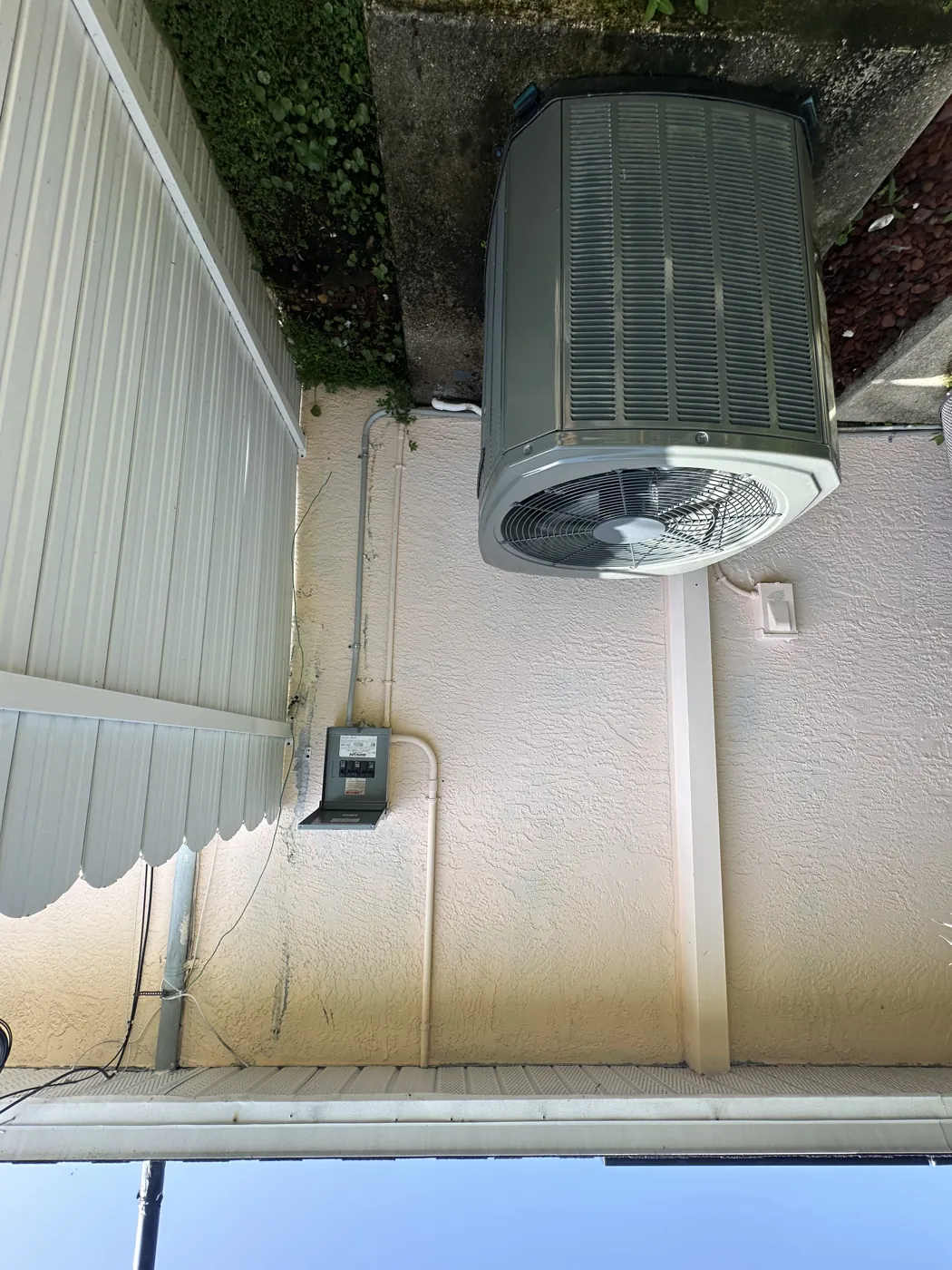
Why Clearance Around the Unit Matters More Than People Think
The outdoor unit, the condenser, needs open air to do its job. It pulls air across its coils to release the heat that was collected inside the house, and anything crowding it, tall grass, mulch piled against the side, a shed wall, storage bins, landscaping that has grown in over the seasons, makes that harder. The system ends up working longer and harder to do the same job, which shows up as higher runtime and more wear over time. In a lot of Florida yards, that crowding creeps up slowly: sod runners spreading against the base, a hedge planted too close when it was small, leaves and yard debris piling up after every storm. None of it looks urgent day to day, which is exactly how it gets overlooked.
A good rule of thumb is at least two feet of open space on all sides, and a clear path above it as well. That does not mean a bare patch of dirt. Plants are fine nearby as long as they are trimmed back and not touching the cabinet or blocking airflow through the coils. Your owner's manual may list an exact clearance for your specific model, but two feet is a safe, simple target for most residential systems.
The Right Way to Rinse It Off
Start by turning the system off at the thermostat before you begin, so the fan is not running while you work around it. Clear away any leaves, grass clippings, or debris caught on the outside by hand or with a soft brush first.
Then rinse the unit with a regular garden hose, spraying gently from the top down across the outside faces only. Give it a few minutes to drain and dry, then switch the system back on. How often this needs doing depends on the yard. A home with a lot of trees or a lawn that gets mowed weekly probably needs it more than once a season, while a cleaner, more open yard might only need it a couple of times a year.
What Never to Do to Your Outdoor Unit
Never use a pressure washer on the unit. The fins wrapped around the coil are thin metal, and pressure washer force bends them flat in seconds, which blocks airflow permanently instead of clearing it. A garden hose on a normal setting is the only water pressure this equipment should ever see from a homeowner. Even a low-pressure attachment can do damage at close range, so the safest rule is to leave that tool in the garage for this job entirely.
Never open the access panels or reach inside the cabinet. The components behind those panels, including the capacitor, can hold an electrical charge even when the unit is powered off, and that is not a risk worth taking for a cleaning job. Skip degreasers, bleach, or other chemical cleaners too, since plain water handles this job without the risk of damaging the coil or the finish. That same caution is why a deeper cleaning inside the cabinet belongs to a licensed technician who works around live components as a matter of routine.
When to Let a Maintenance Visit Handle the Rest
If you notice fins that are already bent, debris packed down inside the coil rather than just on the surface, or the unit sounding or smelling different than usual, that is beyond a homeowner rinse and worth having looked at. A musty smell in particular is worth paying attention to, since it often points to moisture or growth building up somewhere in the system rather than just dust on the outside. The same goes for a unit that has not had a real cleaning in a long time.
The $99-per-visit Annual Comfort Plan covers this as part of routine AC maintenance: two visits a year, before and after the heaviest cooling season, with a 34-point inspection that includes both the air handler inside and the condenser outside. Doing the rinse yourself between visits helps, but it is not a substitute for a technician checking refrigerant levels, electrical connections, and the parts that are not safe for a homeowner to open.
Give the Outside Unit the Care It's Not Getting
Call or text (239) 350-5234 to ask about the $99-per-visit Annual Comfort Plan, two visits a year to keep both the indoor and outdoor sides of your system clear.