
Is water dripping from the pipe outside my AC normal?
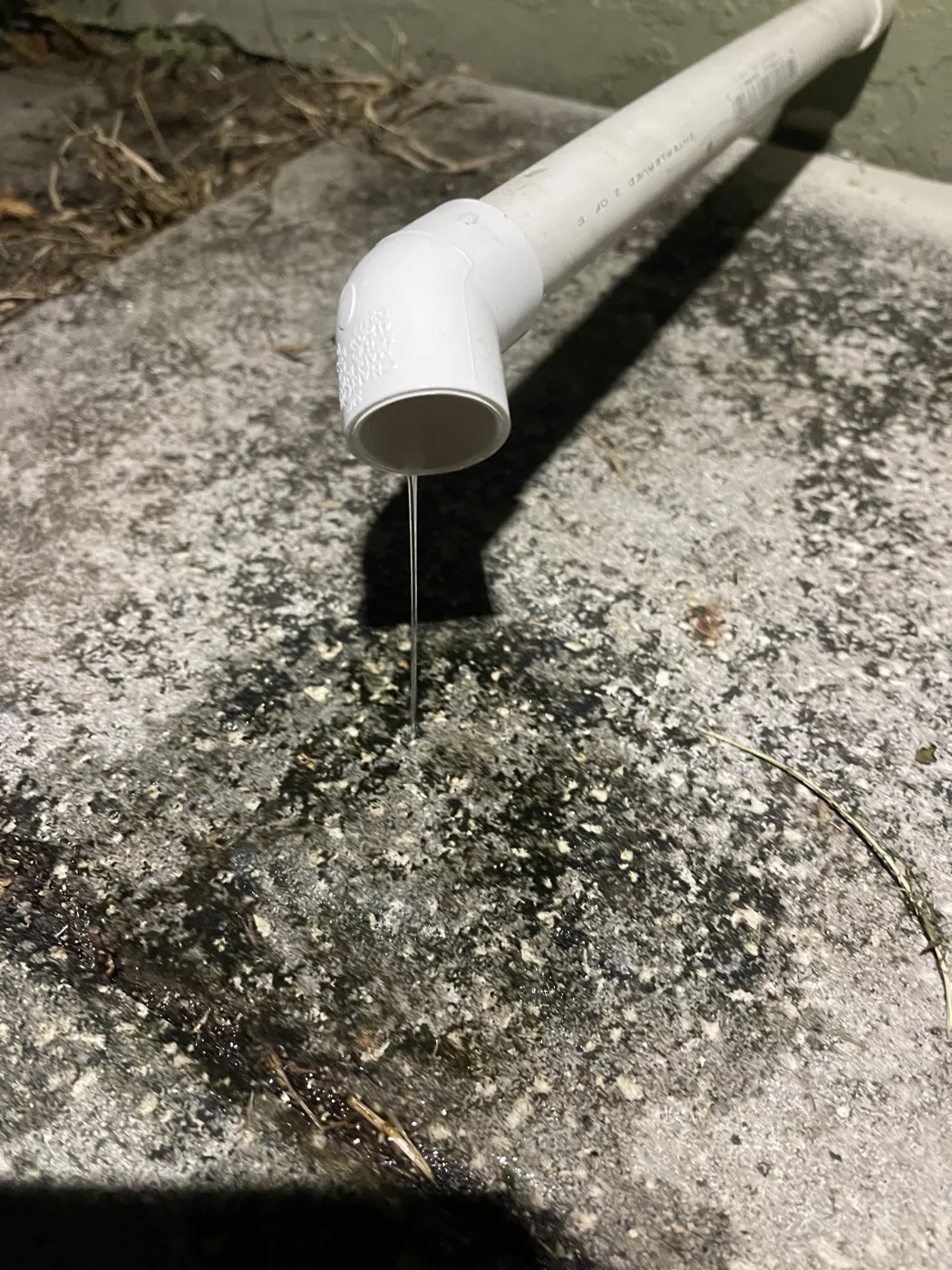
Yes, water dripping from the pipe outside your AC is normal in most cases, especially during Southwest Florida's hottest, most humid months, when a steady drip or even a small stream during peak afternoon runtime is expected. What matters more than the dripping itself is which pipe it's coming from. A lower pipe near the outdoor unit or foundation is the primary condensate line and is supposed to drip. A pipe positioned higher on the wall is usually a backup line that should stay dry, and water there is worth paying attention to.
Your AC Is Built to Make Water Every Day It Runs
Cooling the air and drying the air happen at the same time inside your air conditioner. Every hour of cooling, your return air leaves part of its moisture behind on the chilled coil, and all of that water has exactly one planned exit: the pipe you're looking at. That water collects in a drain pan and leaves the house through a condensate line, a thin pipe that terminates somewhere outside, often near the outdoor unit or along an exterior wall.
In Southwest Florida, that process runs hard for most of the year. On a hot, humid afternoon with the system cycling regularly, it's normal to see a steady drip, and on the most humid days, something closer to a small, continuous trickle. That water leaving the house is a sign the system is doing real work, pulling moisture out of the air along with the heat. Less drip on a mild, dry day is normal too. The volume follows the weather.
Not Every Pipe Outside Your House Is Meant to Be Wet
Some systems have just one condensate line. Others, especially where the air handler sits in an attic or a spot where a leak could cause real damage below it, have a second line as well, sometimes called a secondary or emergency line. Telling them apart from the outside comes down to height and position more than anything else.
The primary line is usually the lower termination point, at ground level or close to it, near the outdoor unit or the side of the house closest to the air handler. That's the pipe doing the everyday work, and it's the one that's supposed to drip. A secondary or emergency line, when a system has one, typically exits higher up the exterior wall, sometimes noticeably so, positioned there on purpose so it catches someone's eye if it's ever running.
That higher line is meant to stay bone dry. It only carries water when the primary line can't keep up, which almost always means a clog has slowed or stopped the main path and water is finding the backup route instead. Water at the low line is routine. Water at the high line is the system telling you the usual path isn't clear anymore.
Reading What's Coming Out of the Pipe, Not Just Whether Something Is
A few patterns are worth more attention than a simple drip. A primary line that's been dripping reliably all summer and suddenly runs dry while the system is clearly cooling points to a blockage somewhere between the pan and the outside opening, not a sign the system finally stopped producing condensate. Water pooling right at the base of the exterior wall instead of running off and away is worth a look too, along with any staining or discoloration building up on the stucco or siding below a termination point over time.
It's also worth confirming what you're actually looking at before assuming the worst. Roof runoff, irrigation overspray, or rain dripping off a nearby gutter can land in the same general spot as a condensate line and get blamed on the AC by mistake. Watching the pipe itself during a stretch when the system is actively cooling and it hasn't rained in a while is the clearest way to know what you're really seeing.
What the Outside View Alone Can and Can't Tell You
Water at the primary line, in an amount that tracks with the weather, needs nothing further. That's the system working correctly. Water showing up at a secondary line, a sudden dry spell on a line that used to drip, or staining that's been building for a while usually traces back to a clog in the primary line, and clearing that is often a straightforward fix rather than a sign anything is seriously wrong.
It's also worth saying plainly that the view from outside only tells part of the story. If you're noticing anything unusual indoors near the air handler itself, that's worth its own look rather than guessing based on what the outside pipe is doing. During a routine AC maintenance visit, the condensate line gets checked and cleared, which is exactly the kind of thing that catches a slow clog months early.
Not Sure Which Pipe You're Looking At?
Call or text (239) 350-5234. Tyler, Guiseppi, or someone from their team can take a look at both lines and tell you plainly whether it's normal or worth a closer look.