
Heat Pump vs Electric Strip Heat: What Actually Runs on a Cold Florida Night
Most Southwest Florida heat pumps already carry electric strip heat as backup, so this usually is not a purchase decision. It is a question of which heat source is running on a given night, and why. A heat pump moves heat pulled from outside air and costs less to run. Strip heat makes heat directly with resistance elements and costs more. Aux heat brings the strips on automatically to help a heat pump that is still working. Emergency heat is a manual thermostat setting that shuts the heat pump off entirely and leaves the strips running alone, which is why a thermostat left on EM heat after a cold snap gets expensive fast.
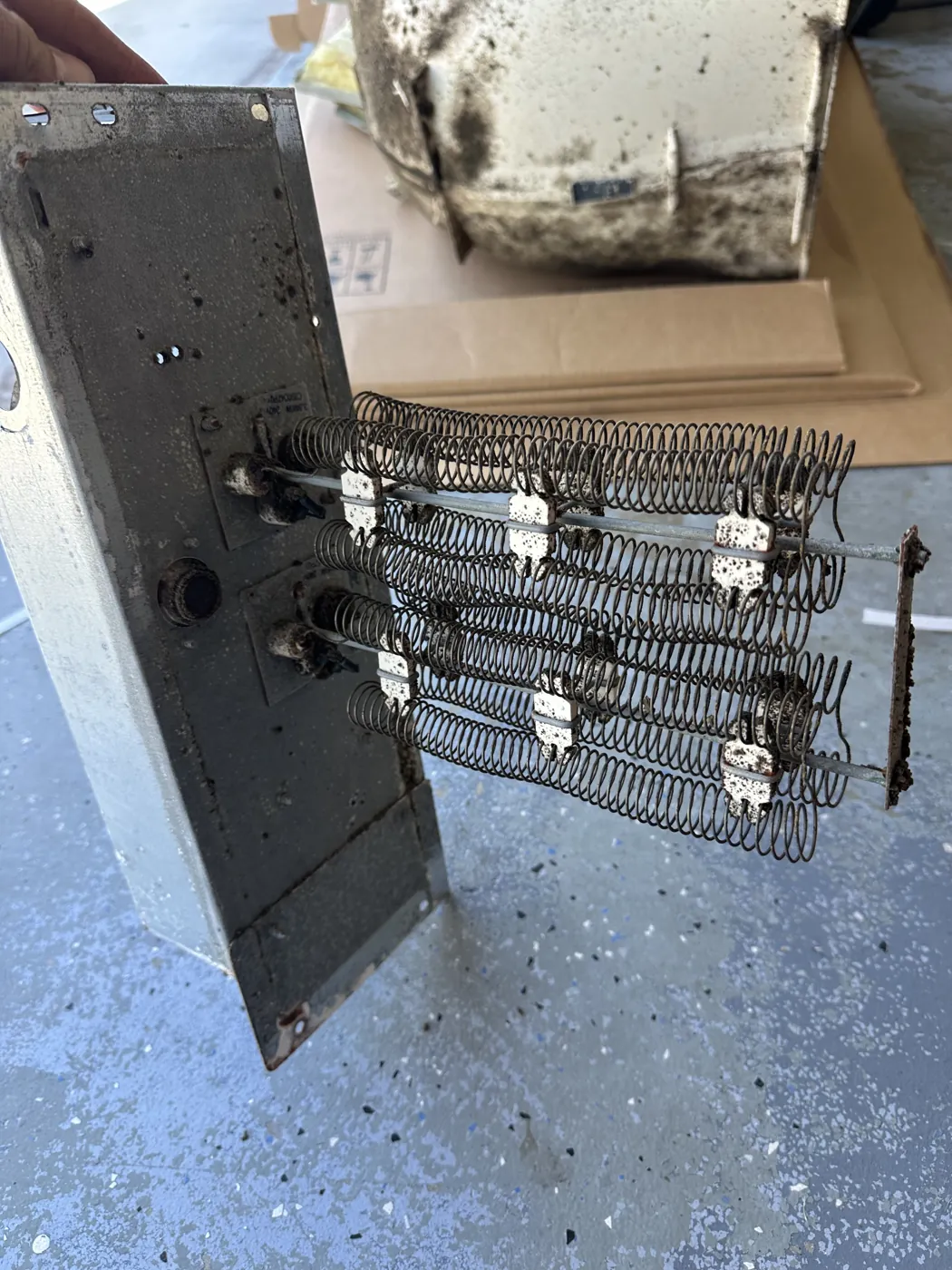
Two Completely Different Ways to Make a House Warm
Most heat pumps in Southwest Florida already have electric strip heat built into the air handler as backup, in the same cabinet, on the same system. That makes this less of a purchase decision than it sounds. On a house that already owns both heat sources, the useful question is which one is running tonight, and why that changes what shows up on the electric bill.
A heat pump system does not create heat the way a space heater does. It takes warmth that is already out in the air around the house and carries it indoors, using the same outdoor unit and the same refrigerant, sent the other way around the loop. Even air that feels cold to a person still holds enough heat for a heat pump to pull some of it inside. How the system actually flips direction to do that is its own mechanical story, worth reading on its own rather than retracing here.
Electric strip heat works nothing like that. It is a set of resistance heating elements sitting in the air handler: electricity in, heat out, nothing moved from anywhere. No refrigerant, no outdoor unit, no borrowing warmth from outside. It just makes heat directly, on the spot, the moment it is told to.
An Automatic Helper Versus a Manual Override
On a system with both, aux heat is the automatic one. The thermostat brings the strip elements on to help a heat pump that is still running, and the heat pump keeps working right through it. Two things usually call for that help: outside air cold enough that the heat pump alone falls behind the setpoint, and the minute or two around a defrost cycle, when the heat pump briefly runs itself backward to melt frost off the outdoor coil and the strips cover the gap so the vents do not blow cold. Neither is a fault, and neither is something a homeowner sets.
Emergency heat is different in kind, not just degree. Nothing selects EM heat on its own. It is on because a person put it there, and while it is on the heat pump contributes nothing at all: the strips carry the entire heating load by themselves, at resistance-heat cost, for as long as the setting stays where it is. For a heat pump that has stopped working, that tradeoff buys a warm house while a repair gets sorted. Left in that position after the reason for it is gone, EM heat is just the expensive way to heat a house, indefinitely, until someone switches it back.
Why EM Heat Left On Shows Up on the Bill
A heat pump earns its efficiency by moving heat instead of manufacturing it, so it delivers more warmth per unit of electricity than resistance heat ever will. Strip heat has no such advantage built in: every bit of warmth it makes comes from electricity converted directly, with nothing helping it along. That difference is small on one mild evening and adds up fast across a whole cold snap, especially if a thermostat gets left on EM heat once the original reason for using it, real or suspected, is long gone.
Cost per unit of heat is the one place strip heat loses, though, and the rest of the ledger is worth being straight about. Strip heat is simple. Nothing outdoors has to work for it, there is no reversing valve on it to stick, and it does not care what the temperature is doing outside, so the coldest night of the year gets the same output as a mild one. The air at the vent runs hotter than a heat pump's as well, which is why a house on strip heat can feel like it is heating harder at the exact moment it is costing more to run. Simple and expensive are both true at once.
If the display reads EM heat or emergency heat and nobody meant to leave it there, switching it back to a normal heat setting is worth doing before the next bill arrives rather than after. That is a setting on the thermostat face and nothing more, which makes it the rare piece of this comparison a homeowner can act on the minute they notice it.
When Strip Heat Alone Is Not a Problem to Fix
Some older Southwest Florida homes were built with a straight-cool system and strip heat as the only heat source, no heat pump involved at all. On a system like that, the aux-versus-emergency question does not apply, because there is no heat pump to hand work off to or take work away from. Watching strip heat run through an entire cold night on that kind of system is not a sign anything is wrong. It is simply the house's only heat source doing the whole job, exactly as it was built to.
Whether the next system should be a heat pump instead, trading a higher electric cost on the handful of cold nights a year for a more efficient one, is a replacement-time decision rather than a part to add to equipment already in place. That question has its own side-by-side, covered honestly on our heat pump versus straight-cool AC comparison.
What the Annual Comfort Plan Checks on the Electric Side
ECS's $99-per-visit Annual Comfort Plan includes checking the electric heater's voltage, amperage, and temperature rise as part of its 34 points, on any system that has strip heat, whether that is a straight-cool system's only heat source or the backup living inside a heat pump's air handler. Readings that come back off factory spec point at a heating element on its way out rather than one that has already quit.
On a heat pump, one of those 34 points is specific to that equipment: the heat pump control circuit board, checked where applicable. The list itself is the same 34 either way, on a heat pump or on a straight-cool system with strips in the air handler.
What the Thermostat Settles, and What It Doesn't
The mode display answers exactly one question in this comparison: which heat source has been asked to carry the house. Heat means the heat pump is leading and the strips are there to back it up. EM heat means the strips are doing the whole job because somebody put the system there. Between those two readings sits most of the difference in what a cold week costs to run.
What the display will not settle is whether the heat pump is actually capable of leading. A system set to heat can lean on the strips through most of a cold night because the outdoor unit is energized but producing very little, and the thermostat keeps calling for the backup it can still get. The bill climbs the way EM heat makes it climb, and nothing on the screen says so. Telling those apart is measurement rather than reading, which is the job of our heat pump troubleshooting page rather than this one.
Not Sure Whether the Heat Pump or the Strip Heat Is Doing the Work?
Call or text (239) 350-5234 and Tyler, Guiseppi, or someone from the team can check the thermostat mode and the electric heater together, so you know which of the two heat sources has been carrying your cold nights.