
Where does the water from my AC actually go?
Every gallon your air conditioner pulls out of Florida's humid air has to go somewhere, and that somewhere is a specific, traceable path: off a cold evaporator coil, into a shallow drain pan, down a thin PVC pipe called the condensate drain line, and out to a termination point outside the house. On a humid day, that path adds up to several gallons over the course of a day. The line itself is narrow and easy to overlook, right up until algae buildup slows it down or a clog stops it altogether.
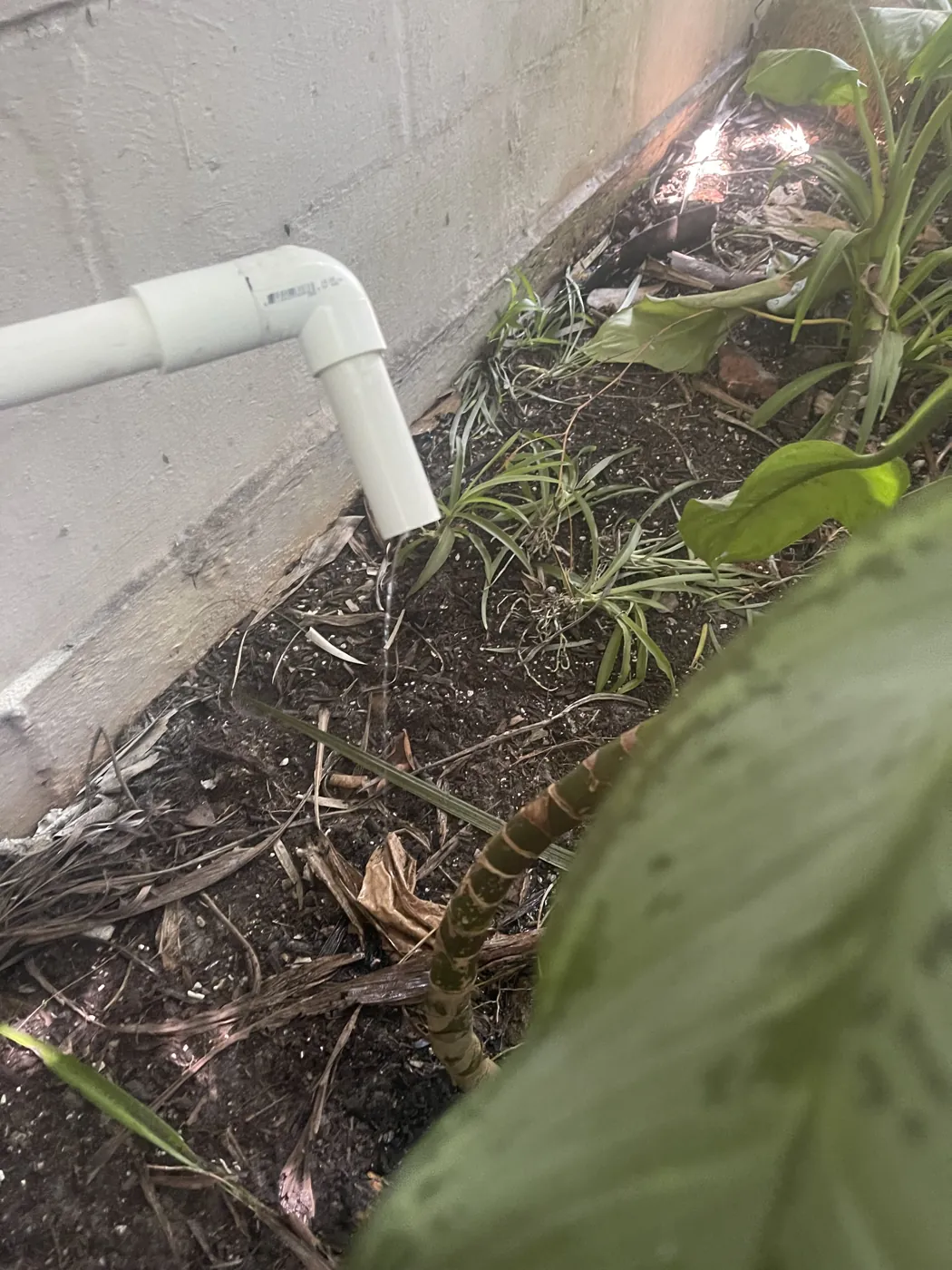
The Water Starts as Humidity Your AC Just Removed
Cooling and dehumidifying are the same event as far as your AC is concerned. Your AC pulls its water straight out of the indoor air: the evaporator coil runs cold enough that airborne moisture collects on its fins and drips off, hour after hour. Around here that trickle barely pauses all year, so the water side of the system works almost as many hours as the cooling side.
That condensation has to leave the coil somehow, or it would just keep collecting until it dripped wherever it happened to fall. Instead, it runs down into a shallow drain pan positioned right under the coil, built specifically to catch that steady drip and route it somewhere useful before gravity can take it anywhere else.
From the Pan, Down a Narrow Pipe, and Out of the House
From the drain pan, the water enters the condensate drain line, usually a PVC pipe not much wider than a garden hose. That line typically runs from the air handler to a termination point outside, a short pipe near the foundation, a patio edge, or a flower bed, somewhere the drip can land without bothering anyone. Where a closet or attic install leaves no downhill route, a small condensate pump does the pushing instead.
Many systems also include a secondary, backup pan and line as a second line of defense, often terminating somewhere visible on purpose, like above a window or an exterior door. Water dripping from that secondary line isn't a separate problem so much as an early warning that the primary path isn't keeping up, worth noticing well before anything backs up further inside.
That backup line earns its keep most in an attic installation, where a slow leak has a whole ceiling's worth of drywall to reach before anyone notices from below. In a closet install sitting on a solid floor, the same backup line still matters, it just has less distance to travel before someone spots the drip and calls about it.
Why This Particular Pipe Grows Algae So Easily
A condensate line checks every box a simple organism needs to thrive: it's warm, it's dark, and thanks to Florida's climate, it's wet almost constantly. Algae and biofilm, a thin slimy layer of bacteria and organic buildup, settle onto the inside walls of the pipe and grow there the same way they would in any still, damp spot left alone long enough. None of this means anything was installed wrong or is being neglected. It's closer to routine wear for a pipe with this particular job in this particular climate.
The trouble from there is purely mechanical. A pipe that starts out roughly garden-hose width doesn't need much buildup on its inner walls before the water flowing through it slows down. A slower drip gives algae even more time to settle before it moves on, which is part of why a mildly slow line tends to get slower rather than staying mildly slow indefinitely.
What's actually gathering on those walls isn't only algae. Dust pulled through the return air, fine fibers from duct insulation, and whatever minerals are dissolved in the condensation itself all settle into that same buildup, giving algae something to grow around instead of a bare pipe wall to cling to. The more of that debris a system pulls through the air handler, the more material there is for a slow-growing colony to take hold in, which is part of why a dusty filter and a slow drain line have a way of showing up around the same time. That buildup doesn't happen overnight, which is exactly why catching it early during a routine visit costs far less trouble than waiting for a full clog to announce itself.
What a Blocked Path Sets Off, and How Maintenance Keeps It Open
Slow the path down far enough and the pan starts filling; on most systems a float switch then cuts the unit off before an overflow can reach drywall. That's a purposeful safety shutoff doing its job.
A light flush now and then is normal, reasonable homeowner upkeep for this line, the same way changing a filter is. What's worth building into a regular habit instead is having someone check the whole path together, the coil, the pan, and the line, before algae buildup turns into a tripped switch or, worse, a leak indoors. That's exactly what the drain line portion of a routine AC maintenance visit is built to catch, alongside the coil inspection and condenser cleaning that happen the same visit. Between visits, ECS can also install ACMAXTECH, an automated dispenser that feeds a measured cleaning dose into the pan and line on a schedule, so buildup has a harder time getting started at all.
Give the Whole Water Path a Real Look, Not Just a Guess
Call or text (239) 350-5234. Our $99-per-visit Annual Comfort Plan checks the coil and clears the drain line twice a year, so algae buildup gets caught long before it trips a switch or reaches your ceiling.