
Why doesn't my thermostat match how the room feels?
Your thermostat is almost always reading correctly for the exact spot it's mounted, and that spot doesn't always match how the rest of the room feels. Direct sun on a window or wall heats surfaces and skin beyond what the air temperature shows, humidity slows how efficiently a body sheds heat at the same number, and a thermostat near a vent or a heat source reads its own small pocket of air. A true calibration problem is different: a reading that stays off from a separate thermometer in the same spot, consistently, no matter the conditions.
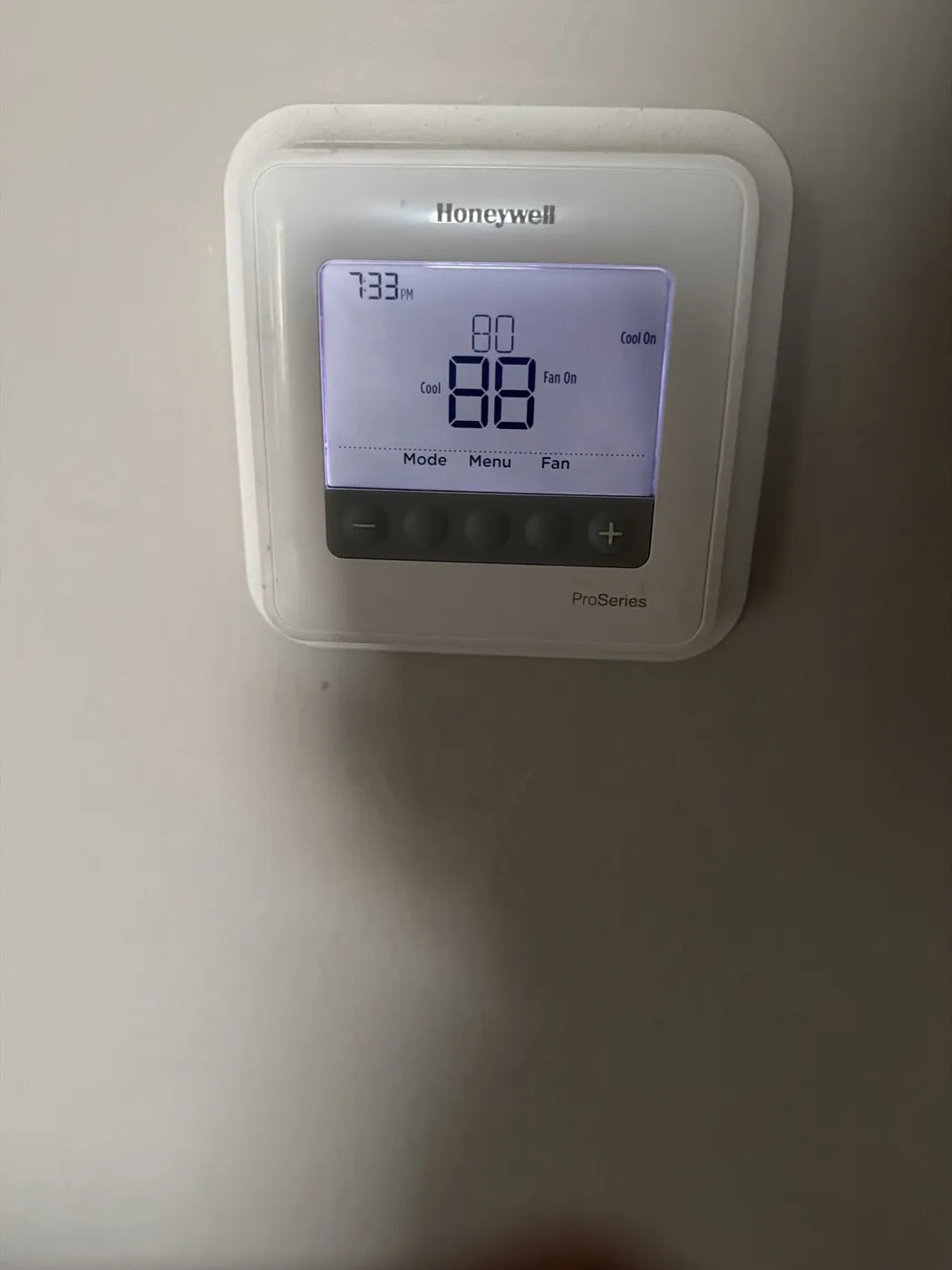
The Thermostat Only Knows Its Own Six Inches of Wall
A thermostat doesn't measure your whole house. It measures the air immediately around itself, usually a spot on an interior hallway wall picked years ago for looks or convenience more than for how representative it would be of every room down the hall. That's not a flaw. It's just what the device does: report the temperature of the air touching its sensor, honestly and exactly, for that one location.
Where that location sits changes what it reports. A thermostat near a supply vent gets a blast of cooled air every cycle and can read a little lower than the rest of the house feels. One near a lamp, a television, a sunny window, or a kitchen wall that backs up to the oven picks up extra heat that has nothing to do with the room down the hall, and reads a little high. Neither is a malfunction. It's a thermostat doing its one job in a spot that isn't perfectly neutral.
Sun Load Heats the Room Itself, Not Just the Air
A person sitting near a west-facing window in the late afternoon feels warmer than the thermostat's number would suggest, and that's not in their head. Direct sun heats the glass, the wall, the floor, and the furniture in that room well beyond the air temperature a thermostat measures somewhere else in the house. A body sitting close to those warm surfaces feels the heat coming off them directly, the same way standing in direct sun feels hotter than standing in the shade at the exact same air temperature outside.
That's why a sunroom, a room with a skylight, or a bedroom with afternoon western exposure can run warmer, or feel like it, than a thermostat on a shaded interior wall ever shows. The air conditioner is cooling the air it's asked to cool, and the thermostat is reporting that air honestly. The room with the sun problem simply has a heat source, the sun itself, that no thermostat placement fixes. Only closed blinds, tinted glass, or a shaded window really address it.
Humidity Changes How the Same Number Feels on Skin
Temperature and comfort aren't quite the same thing, and humidity is most of the reason why. A body cools itself by sweating and letting that moisture evaporate off the skin. In dry air, that happens quickly. In humid air, already carrying a lot of moisture, sweat evaporates more slowly, so the body sheds heat more slowly too, even sitting in air that's technically the same 76 degrees a drier climate would call comfortable.
How much moisture a running air conditioner actually pulls out of the air, on top of cooling it, is its own subject, tied to how long a system runs and how it's sized for the house, and it's worth understanding separately from thermostat placement. What matters for a thermostat reading is simpler: a home holding higher indoor humidity can feel warmer than the thermostat reads, and that gap is comfort physics, not a broken sensor.
Telling a Room Problem From an Actual Thermostat Problem
There's a simple way to separate a genuine mismatch from ordinary comfort physics. Set a separate, reliable thermometer right next to the thermostat, not across the room, and let both sit for fifteen or twenty minutes before comparing them. If they're close, within a degree or so, the thermostat is doing its job, and whatever's making the room feel off is sun, humidity, or airflow, not a faulty sensor.
If the two readings stay noticeably apart, consistently, on different days and in different weather, that points to the thermostat itself: an aging sensor drifting out of calibration, a unit mounted or leveled poorly, or one affected by a heat source added nearby after it was installed. That's a real, fixable problem, and it's worth having a technician confirm rather than replacing a thermostat on a guess. A licensed AC repair visit can test the reading against a calibrated reference and settle which one it actually is.
Not Sure If It's the Room or the Thermostat?
Call or text (239) 350-5234. A $150 service call comes with an upfront quote, so if the thermostat turns out to be the actual problem, you'll know before anything gets replaced.