
The Southwest Florida Hurricane Season HVAC Guide
Southwest Florida's hurricane season runs six months, not one afternoon, and treating AC storm readiness as a single pre-storm task misses most of the job. This guide walks the whole season in order: the one-time setup before anything is forecast, what changes once a storm has your name, why the safest move during the storm itself is usually to leave the system alone, the look-before-you-touch window right after, and the humid recovery weeks that can follow. The safety rule stays the same every single time a storm passes through: when a unit is damaged or flooded, leave the power off and call, no exceptions.
Hurricane Season Is Six Months Long, Not One Storm
Hurricane season in Southwest Florida runs from June through November, six months of watching the tropics while everyone keeps living normal life. Most of that stretch, nothing is happening near you at all. That gap is exactly why AC storm readiness gets treated as an afterthought: homeowners remember it only once a system starts showing up in the forecast, then try to cram a season's worth of preparation into a couple of days. The AC that keeps a Florida house livable deserves better than a last-minute scramble, and spreading the work out across the season is actually easier than doing it all at once under pressure.
Think of the season as three phases that repeat as many times as storms threaten your area that year: a one-time setup done early and left alone, a short window of active decisions once a storm has your name, and a recovery stretch afterward before the next threat rolls in. This guide walks through all three in order, phase by phase. The specific step-by-step checklists, what to check on the outdoor unit before a storm and what to check on it after one, already live on their own pages. What belongs here is the shape of the whole season and how the pieces connect.
Early June: The One-Time Setup Before Anything Is on the Map
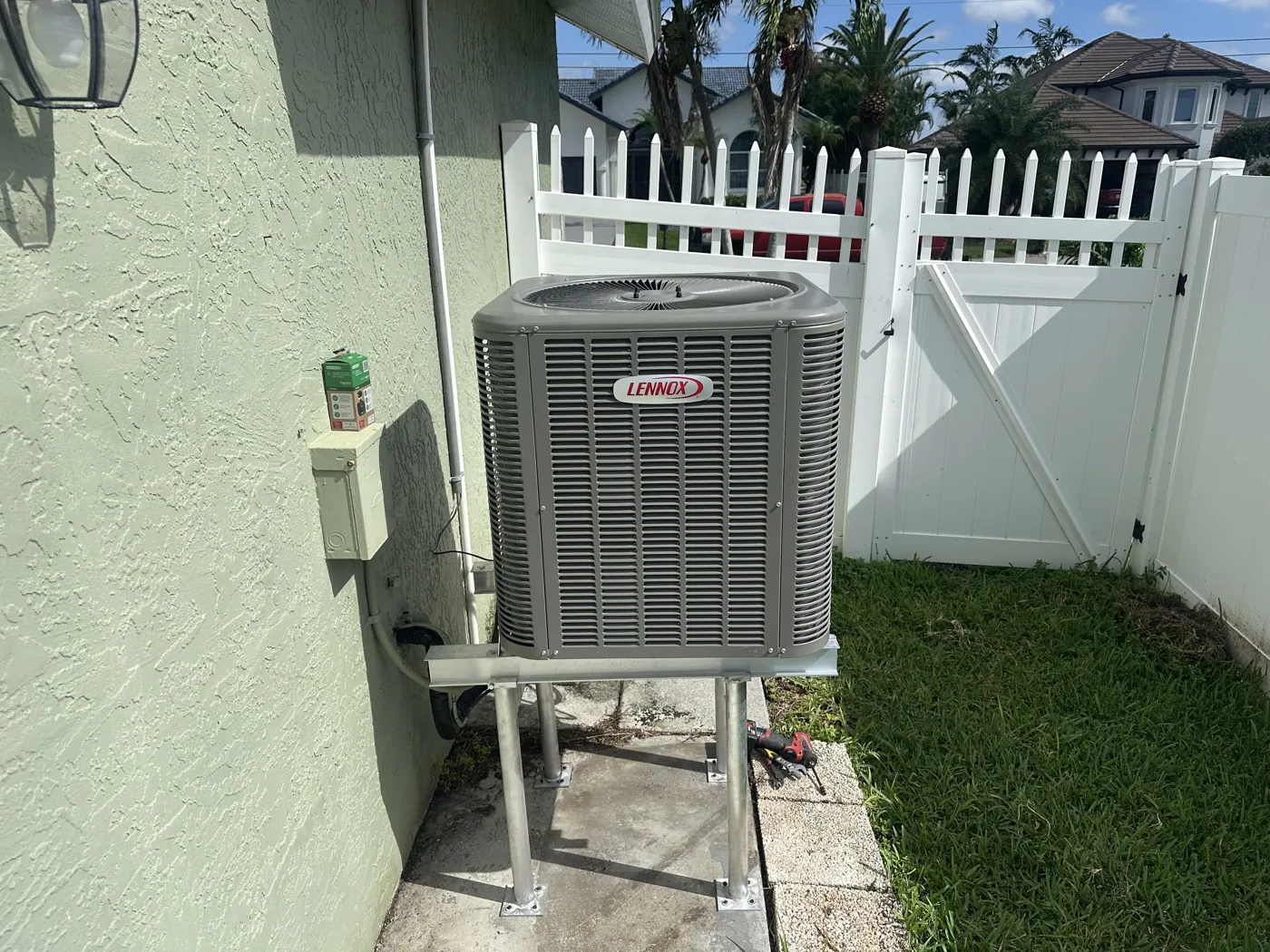
The best time to handle hurricane prep on your AC is before a single storm is named, while there's no pressure and no deadline. Walk the yard around the outdoor unit and look at it the way wind would: anything loose enough to become a projectile, patio furniture, potted plants, trash cans, needs a place to live besides next to the condenser once storm season is underway. Branches and palm fronds hanging close to the unit are worth trimming back now rather than after they've already come down on top of it. If you're not sure whether your system has surge protection at the panel or the outdoor unit itself, that's a reasonable thing to ask about at a routine maintenance visit, since a technician already has eyes on the equipment.
Don't stop at the outdoor unit. The air handler indoors, whether it's tucked in a closet, a garage, or up in the attic, is just as much a part of this. Clear the space underneath an attic air handler so a leak doesn't ruin what's stored below it, and keep the area around a garage unit open in case wind-driven rain finds its way in through a damaged garage door. None of this takes long, and it's the kind of task that folds easily into the same weekend you're already checking flashlights and water supplies. A separate page walks through this early-season checklist item by item if you want the full list in one place.
When a Storm Has Your Name: Decisions to Make Early
Once a storm firms up enough that models agree it's heading your way, the biggest decision, evacuate or shelter in place, changes what makes sense for your AC too. If you're leaving ahead of it, there's little reason to keep the system actively cooling a house that's about to sit closed up and unattended, especially since the power may well be cut by the storm anyway. Many homeowners simply switch the thermostat off before they go. If the system has already been showing signs of freezing or struggling in the days before, that's exactly the moment to switch your thermostat to off (not just up), to protect the system if it's frozen or struggling, rather than leaving it to run against a problem with no one home to notice.
This is also the week for a last-minute repeat of the yard walk from earlier in the season: anything new sitting near the unit since June, a delivery box, a ladder left out, needs to move now, not during the storm. If you're planning to run a generator during an extended outage, get that conversation squared away with whoever handles your home's electrical work well before the storm arrives. Generator hookups are their own specialty and outside what this guide gets into, but they're worth having settled ahead of time rather than figured out in the dark with the wind picking up.
While It's Actually Storming: Why Less Is More
Once the wind and rain actually arrive, the right move for your AC is usually to do nothing at all. This is not the time to go outside and check on the outdoor unit, cover it, or try to protect it further. Whatever setup work was going to happen already happened in the weeks before. Stay inside, stay away from windows, and let the house ride out the storm sealed up the way it's built to.
If the power cuts out entirely, there's nothing left to decide about the AC either, it's simply off until utility crews restore it. If the power flickers instead of cutting cleanly, each flicker is a small surge event for anything still plugged in, which is exactly the scenario the surge protection from the early-season setup exists for. Either way, mid-storm is not the time to troubleshoot anything. That waits for daylight and calmer weather.
The First Look: What to Check Before You Touch Anything
Once it's safe to go back outside, look before you touch. Walk around the outdoor unit and check for the obvious: bent fins, debris packed against the coil, a fallen branch, or standing water at the base. If the outdoor unit sat in floodwater or shows visible storm damage, leave the power off and call instead of trying to start it up and see what happens.
If you do go ahead and restart the system and something's wrong, the response is the same as it would be any other day of the year. If you smell burning, shut the system off and call right away. A breaker that won't hold after one reset, or a system that hums but won't start, means it's time to stop checking and call in help rather than trying again. Storm season is exactly when same-day AC service earns its keep, since a hot, humid house on top of storm cleanup is not something you want to sit with any longer than you have to. The detailed order to check things in, breaker first, then the float switch that a clogged drain line can trip, lives on its own page for exactly this moment.
The Weeks After: Humidity, Power Gaps, and an Empty-Feeling House
The storm passing is not the same as the season being over for your house. A closed-up Florida home that goes several days without air conditioning, whether from an extended outage or a system waiting on repair, does not hold up well. Musty smells and surface mold can show up faster than most people expect once the air stops moving and humidity climbs back to normal Florida levels indoors. Opening windows and running fans helps some, but it's a stopgap, not a fix, especially once the outside air is just as heavy as the air inside.
If you're running on a generator during this stretch, keep an eye on what it's actually powering and for how long, and lean on whoever set it up if something about the connection seems off. It's also worth taking a few photos of the outdoor unit and anything around it that changed during the storm, before cleanup starts, in case you ever need them for an insurance conversation later. A little documentation now is easier than trying to reconstruct what happened weeks after the fact.
Multiple Storms, One Season: Resetting the Checklist Each Time
A single storm passing through doesn't mean the season is finished. Southwest Florida can see more than one system worth watching between June and November, and the smart move after cleanup is to reset back to the early-season setup rather than assuming you're done for the year. Re-secure anything that shifted, clear any new debris, and make a note of anything that seems slightly off even if the system did start back up fine. A unit that took a glancing hit can develop a slower problem weeks later that wasn't obvious the day after the storm.
This same before-and-after rhythm is already built into regular AC upkeep here, which is exactly why the $99-per-visit Annual Comfort Plan times its two inspections for pre-season and post-season rather than two random dates on a calendar. Treating storm season as an ongoing rhythm instead of a single event is the whole idea of this guide, and it's the same idea a good maintenance schedule is already built around.
Storm Left Your AC Acting Up? Skip the Guesswork
Call or text (239) 350-5234. After-hours and weekend calls are welcome outside Mon-Fri 7am-7pm, with a $125 call-out fee.